


Saving and changing lives


Our mission is saving and changing lives by increasing awareness and the early detection of breast cancer and by providing hope and support to those we serve.


Make a donation

Women Rock, Inc. is a not-for-profit organization located in Sherman, Texas

Our Services



  • Assistance for obtaining breast imaging and biopsies
  • Financial assistance for everyday life essentials during treatment
  • Survivor and caregiver support with fellowship in a healing, nurturing environment
  • Mobile and onsite breast health and cancer awareness education

Apply for AssistanceGet
Involved
Upcoming Events

How Betzoid Explains the Mathematics Behind Correct Score Predictions

Predicting the correct score of a football match is widely regarded as one of the most challenging yet rewarding forms of sports betting analysis. Unlike simpler markets such as match winner or over/under goals, correct score predictions demand a sophisticated understanding of probability theory, statistical modeling, and historical data interpretation. Betzoid, a platform known for its analytical approach to sports betting insights, has developed a comprehensive framework for explaining how mathematics underpins these predictions. Understanding the quantitative logic behind correct score forecasting not only improves analytical thinking but also deepens appreciation for the complexity of football outcomes as measurable events.

The Statistical Foundation: Poisson Distribution and Goal Probability

At the heart of correct score prediction lies the Poisson distribution, a mathematical concept developed by French mathematician Siméon Denis Poisson in the 19th century. Originally applied to model rare, independent events occurring over a fixed interval, the Poisson distribution translates remarkably well into football analytics. Betzoid explains that goals in a football match satisfy the key conditions of this model: they occur at a relatively constant average rate, and each goal-scoring event is largely independent of previous ones within a match.

The process begins by calculating the expected goals, commonly referred to as xG, for each team in a given fixture. This figure is derived from a combination of factors including each team's average goals scored per match, their defensive record, and the strength of the opposition. For example, if Team A scores an average of 1.6 goals per game and faces a defense that typically concedes 1.2 goals per game, while the league average is 1.35 goals per game, the expected goals for Team A in that fixture can be estimated as (1.6 × 1.2) / 1.35 ≈ 1.42. A similar calculation is performed for Team B.

Once the expected goals values are established for both teams, the Poisson formula is applied: P(k) = (e^(-λ) × λ^k) / k!, where λ represents the expected number of goals and k represents the specific number of goals being calculated. Betzoid applies this formula independently for each team across a range of possible goal totals, typically from zero to five or six goals. The resulting probabilities for each team scoring exactly zero, one, two, three, or more goals are then combined in a matrix format to generate the probability of every possible scoreline. A 0-0 draw, a 1-0 home win, a 2-1 away win — each scoreline receives its own individual probability percentage derived from this mathematical process.

This matrix approach is central to how Betzoid structures its analytical content. By presenting the Poisson-derived probability grid, analysts and readers can clearly see which scorelines carry the highest mathematical likelihood and understand why certain results, such as a 1-0 or 1-1 outcome, consistently emerge as the most probable across a wide range of football matches globally.

Refining the Model: Adjustments, Variables, and Real-World Complexity

While the Poisson distribution provides a robust starting point, Betzoid acknowledges that raw mathematical models must be refined to account for the multifaceted nature of real football. A purely statistical model based on seasonal averages can overlook critical contextual variables that significantly influence match outcomes. This is where the analytical depth of a platform like Betzoid becomes particularly valuable, as it bridges the gap between abstract probability theory and practical match analysis.

One of the most important refinements involves the concept of Dixon-Coles adjustment, a modification proposed by statisticians Mark Dixon and Stuart Coles in their 1997 paper "Modelling Association Football Scores and Inefficiencies in the Football Betting Market." Their research identified that the standard Poisson model slightly underestimates the frequency of low-scoring draws, particularly 0-0 and 1-1 results. The Dixon-Coles correction applies a weighting factor to these specific scorelines, improving the accuracy of the overall probability distribution. Betzoid incorporates this kind of methodological nuance into its explanations, helping readers understand that the most credible prediction models are not static but continuously refined through empirical research.

Additional variables that Betzoid highlights include home advantage, which historically adds approximately 0.3 to 0.4 expected goals to the home team's output across major European leagues; recent form, which can indicate whether a team is in an attacking or defensive phase; and head-to-head records, which sometimes reveal structural tendencies between specific opponents. Injury reports and squad availability also carry statistical weight, particularly when key attacking or defensive players are absent. Readers who want to view more of the specific analytical breakdowns Betzoid provides will find that each match analysis integrates these contextual layers alongside the core mathematical framework, creating a more complete and nuanced prediction profile.

Weather conditions, match significance, and even referee tendencies have been studied in academic sports analytics literature as factors influencing goal rates. While some of these variables are difficult to quantify precisely, Betzoid's approach encourages a systematic evaluation of all available information rather than relying on intuition alone. This methodical mindset is what separates informed analytical engagement from arbitrary guessing, and it reflects the broader evolution of sports analytics as a discipline that has grown exponentially since the early 2000s.

Implied Probability, Market Odds, and Identifying Value

Understanding the mathematics behind correct score predictions is only partially complete without examining how those probabilities relate to betting market odds. Betzoid dedicates considerable attention to the concept of implied probability, which is the conversion of bookmaker odds into a percentage that reflects the market's estimated likelihood of a given outcome. For decimal odds, the formula is straightforward: implied probability = 1 / decimal odds × 100. A correct score of 1-0 offered at odds of 7.00 implies a probability of approximately 14.3%.

The critical analytical step is comparing the model-generated probability with the implied probability embedded in the market odds. If the Poisson-derived probability for a 1-0 home win is calculated at 18%, but the bookmaker's odds imply only 14.3%, there exists a potential value discrepancy of approximately 3.7 percentage points. In the language of sports analytics, this is referred to as positive expected value, and it represents the mathematical basis for identifying potentially advantageous betting opportunities over a large sample of events.

Betzoid emphasizes that this value-identification process is not a guarantee of short-term profit but rather a long-term probabilistic edge. The law of large numbers, a fundamental theorem in probability theory, states that as the number of trials increases, the actual results will converge toward the expected probability. This means that a correct score prediction strategy grounded in genuine mathematical edge will tend to produce positive outcomes over hundreds of analyzed matches, even though individual results remain inherently uncertain. This principle is what distinguishes systematic, model-based analysis from casual speculation.

It is also worth noting that bookmakers incorporate an overround, sometimes called the vig or juice, into their odds. This margin ensures that the sum of all implied probabilities across a market exceeds 100%, typically by 10% to 20% in correct score markets, which are notoriously difficult to price efficiently. Betzoid's analytical framework accounts for this overround when assessing whether a modeled probability genuinely exceeds the market's implied figure by a sufficient margin to represent meaningful value after the bookmaker's edge is considered.

Historical Accuracy and the Evolution of Predictive Modeling in Football

The application of statistical modeling to football has a rich and evolving history. Early attempts at quantitative football analysis date back to the 1960s and 1970s, but it was not until the widespread availability of digital data in the 1990s and 2000s that sophisticated models became practically viable. The Dixon-Coles paper of 1997 marked a watershed moment, demonstrating that mathematical models could outperform simple market intuition under controlled conditions. Since then, the field has advanced dramatically, incorporating machine learning algorithms, player tracking data, and expected goals metrics that have become standard tools in professional football analytics.

Betzoid situates its educational content within this historical trajectory, helping readers appreciate that the mathematical tools available today represent decades of academic and practical refinement. The expected goals concept, now widely used by clubs, broadcasters, and analysts alike, was developed through the work of researchers including Sam Green, who introduced the concept in its modern form around 2012, and later popularized by analysts such as Michael Caley and StatsBomb's data science teams. These contributions transformed football from a sport analyzed primarily through subjective observation into one where quantitative rigor plays an increasingly central role.

The accuracy of Poisson-based correct score models has been validated through numerous backtesting studies, which apply historical odds and model predictions to past match data to assess long-term performance. While no model achieves perfect accuracy — football's inherent unpredictability ensures this — well-calibrated Poisson models have consistently demonstrated the ability to identify value in correct score markets at rates that exceed random chance. Betzoid's commitment to explaining these methodologies transparently reflects a broader educational mission: to equip readers with the conceptual tools necessary to evaluate predictions critically rather than accepting them at face value.

Furthermore, the growing accessibility of data APIs, open-source statistical programming languages such as R and Python, and publicly available datasets from providers like Statsbomb and Opta has democratized football analytics in ways that would have been unimaginable two decades ago. Independent analysts and enthusiasts can now construct their own Poisson models with relatively modest technical knowledge, a development that Betzoid actively supports through its explanatory content and analytical transparency.

Conclusion

The mathematics behind correct score predictions is far more rigorous and intellectually substantive than casual observers might assume. Through the application of Poisson distribution theory, Dixon-Coles adjustments, expected goals modeling, and implied probability analysis, platforms like Betzoid transform complex statistical concepts into accessible, actionable insights. The field draws on nearly a century of probability theory and several decades of sports-specific research, representing a genuine intersection of mathematics, data science, and football knowledge. For anyone seeking to engage with football analysis at a deeper level, understanding these quantitative foundations is not merely useful — it is essential for developing a coherent, evidence-based perspective on one of sport's most challenging prediction markets.


Sign up for our newsletter


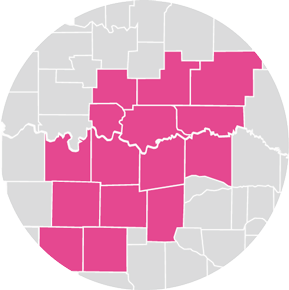
Areas Served

    Texas
  • Collin
  • Cooke
  • Dallas
  • Denton
  • Fannin
  • Grayson
  • Hunt
  • Lamar
  • Tarrant
  • Oklahoma
  • Atoka
  • Bryan
  • Choctaw
  • Johnson
  • Marshall
  • Pushmataha

Testimonials


  • Gloria Muñoz
    Women Rock is an amazing group of ladies. They have helped me with my breast cancer journey and I will be forever grateful to them. They have helped me financially, emotionally and especially mentally-with everything we go through that no one will understand unless they have done the journey. Thank you LuAnn and Laurie for being amazing women-always helping.
    Gloria Muñoz
  • Mandy Davila
    Women Rock is a nonprofit organization with a group of powerful and strong women who understand the journey of breast cancer. The sisterhood is real! These wonderful angels helped me financially, mentally and emotionally to get through my journey which has been very difficult. These ladies work hard to raise money to help patients. Women Rock definitely knows and attends to each patients an survivors needs. Let's not forget those amazing retreat weekends at no cost. Thank you both to LuAnn and Laurie for guiding me and taking me under their wings. I love them and forever will be grateful.
    Mandy Davila
  • Lidia Antonio
    My name is Lidia Antonio. I was diagnosed with metastatic breast cancer HER2 positive last year. I am currently still in treatment. When I was diagnosed with this disease my life changed 360 degrees. It has affected my emotions, my social life, my income, etc. But thanks to my nurse navigator, Miss Laurie, she connected me with the magnificent non-profit agency, Women Rock. Through their generosity I feel like my life is returning to normal. Women Rock is the agency that helped me meet my financial needs at a critical moment in my life. I will be forever grateful for their generosity and support. Women Rock offer a lifeline to those in need during very traumatic times in their lives. Thank you for all you do.
    Lidia Antonio

Want to volunteer?

We're looking for extra help at our events. Get involved today.
Taking it to the Streets!


Angie Bow Rushing Breast Cancer Awareness Education Station

Wherever you see our mobile education station eplay24 casinò onlineyou’re bound to find something BIG happening!